

Lithium Battery Safety: Proper Use and Disposal
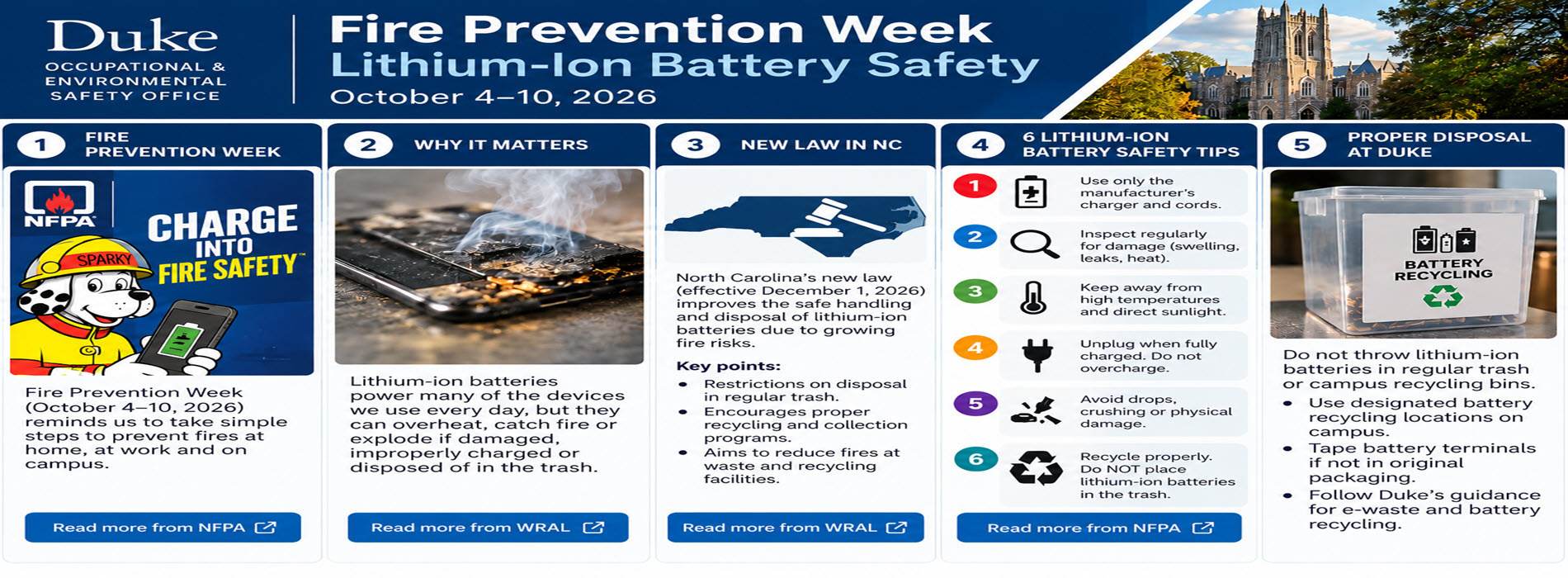
Six Lithium-ion battery safety tips:
- Use the manufacturer-approved battery and charger.
- Charge devices on a hard, stable surface — never on a bed, couch or under a pillow.
- Stop using batteries that are swollen, damaged, leaking, unusually hot or making unusual noises.
- Follow the manufacturer’s charging instructions. Unplug devices when charging is complete and avoid overcharging.
- Keep batteries away from excessive heat and anything that can burn.
- Recycle lithium-ion batteries properly — never place them in regular trash or standard recycling bins.
Read more: NFPA Fire Prevention Week
New North Carolina battery disposal law
Beginning December 1, 2026, North Carolina will prohibit lithium-ion batteries from being disposed of in landfills or permitted incinerators. Improperly discarded batteries can be damaged or crushed during waste handling, creating a serious fire hazard. Batteries should instead be taken to an appropriate collection facility or authorized battery recycler that accepts them.
- Lithium-ion batteries should not be placed in regular trash.
- Proper recycling and collection help reduce fires in waste and recycling facilities.
- The new North Carolina requirements take effect December 1, 2026.
Read more: WRAL — Fire Prevention Week and lithium-ion battery law
Official source: North Carolina battery disposal law summary
Proper disposal at Duke
Do not place lithium-ion batteries in regular trash or standard recycling bins. Use Duke’s approved battery collection process and follow OESO guidance for safe handling and disposal.
Visit Duke OESO’s battery recycling webpage for campus collection guidance and recycling location links. For questions about larger batteries or collection at off-campus Duke facilities, contact OESO Environmental Programs at 919-684-2794.